Utah Guide: How Buying a Lot Works for a Custom Home
Looking at vacant land in Utah and wondering how to build a custom home on it? Learn the step‑by‑step process from picking a lot to move‑in day.
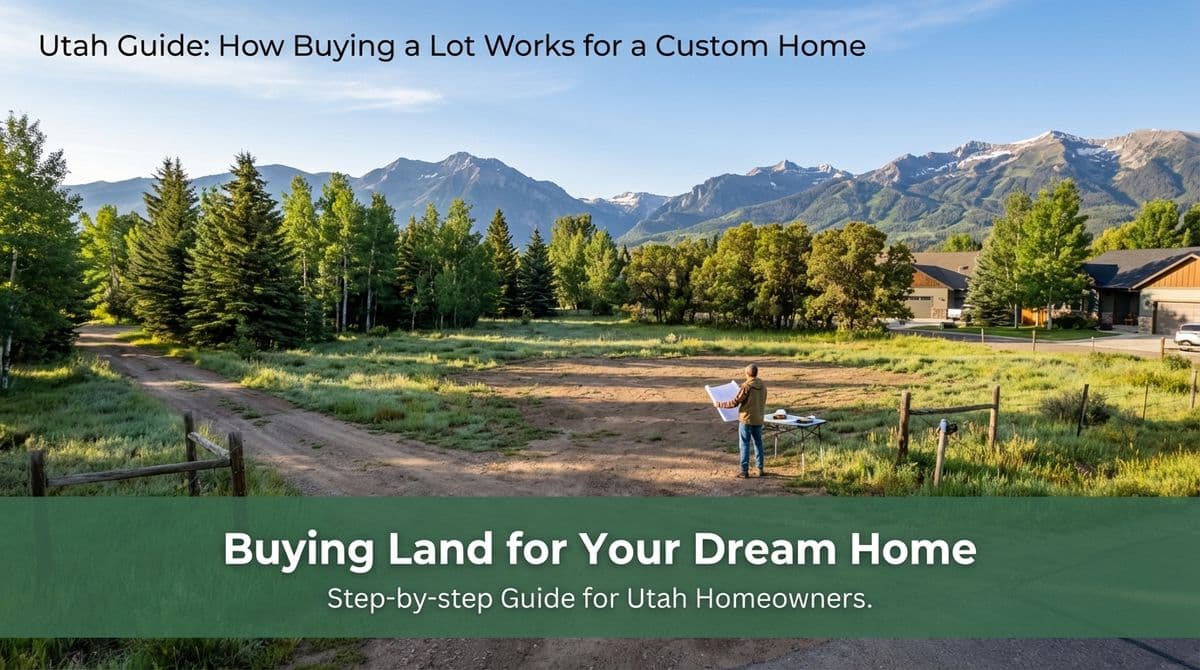
Buying a Lot First, Then Building: How It Works
We recently got a call from a homeowner — let’s call him Mark — who was planning a move to the Salt Lake City area. He had his eye on several vacant lots near Coalville off Silver Creek Road by I‑80, but he wasn’t sure how the process worked.
His main question was simple: “Do I just pick the lot I want, buy it, and then find a builder like you? Or is there some special process or requirement?”
We hear versions of this question a lot from Utah homeowners. Buying land and building a custom home is different from buying an existing house — there are extra steps, different financing options, and a few Utah-specific details to keep in mind.
So in this post, we’ll walk you through how buying a vacant lot works when you want to build a custom home in Utah, step by step, using situations like Mark’s Coalville-area lots as a real-world example.
Step 1: Clarify Your Big-Picture Plan
Before you fall in love with a specific lot, it helps to zoom out and answer a few questions:
- Where do you really want to live? (Salt Lake City proper, Park City, Coalville, rural Summit County, etc.)
- How long do you plan to stay in this home?
- What size and style of home do you want to build?
- What’s your total budget for land + build + site work?
With Mark, we talked through the trade-offs: Coalville-area lots can offer more space and views than in-town Salt Lake, but you’ll want to factor in commute, snow removal, and utility access. Getting clear on these pieces first helps guide every decision that follows.
Step 2: Talk to a Builder Before You Buy the Lot
One of the most helpful things you can do is involve a builder early. In Mark’s case, he called us before making an offer on any specific parcel, which is exactly what we recommend.
Here’s why looping us in early helps:
- Feasibility: We can look at a lot listing, slopes, and access and tell you if it’s likely to support the size and type of home you want.
- Rough cost impacts: Some lots are cheaper up front but need expensive excavation, retaining walls, or long utility runs.
- Timeline expectations: Depending on jurisdiction (Coalville vs. unincorporated county vs. Salt Lake City), permits and approvals can take very different amounts of time.
At this stage, we’re usually reviewing potential lots with you, answering high-level questions, and helping you avoid land that looks like a bargain but comes with hidden complications.
Step 3: Do Your Due Diligence on the Lot
Once you’ve narrowed down a lot you like, it’s time for due diligence. Here are the key checks we encourage every Utah buyer to make:
Check Zoning and Building Restrictions
Every lot is governed by local zoning rules. We help homeowners look at:
- Allowed uses: Is the lot zoned for residential, and are there any minimum house sizes?
- Setbacks: How far from property lines you must build, which affects footprint and layout.
- Height limits: Important for multi-story or view-oriented homes.
Confirm Utility Availability
With lots like the ones near Coalville, utilities can be the make-or-break factor:
- Water: City water, a private company, or will you need a well and water rights?
- Sewer: Municipal sewer vs. septic system (and is the soil suitable for a septic drain field?).
- Power and gas: Are they at the lot line, or will you pay to bring them in from the road?
- Internet: Fiber, cable, or satellite — important if you work from home.
We often coordinate with utility providers or refer you to surveyors and engineers who can verify these details before you close on the land.
Understand HOA and CC&R Rules
Many Utah subdivisions, especially in scenic or mountain areas, have HOAs and recorded CC&Rs (Covenants, Conditions, and Restrictions). These can dictate:
- Minimum square footage
- Exterior materials (for example, limits on vinyl siding)
- Roof pitches and colors
- Outbuildings, RV parking, and fencing
For Mark’s situation, we would ask for copies of any CC&Rs or architectural guidelines so we can confirm that the custom home you want to build will be allowed before you buy.
Step 4: Plan Your Financing (Land + Construction)
Buying a vacant lot and then building usually involves different financing than a standard home mortgage. In Utah, most clients go one of three ways:
Option 1: Pay Cash for the Lot, Finance the Build
If you have the funds, paying cash for the land simplifies things. Later, you arrange a construction loan or a construction-to-permanent loan for the home itself. The paid-off lot can often count as your “down payment” or equity in the project.
Option 2: Land Loan + Construction Loan
Some banks offer separate land loans, which are then rolled into a construction loan once you’re ready to build. These usually require a larger down payment, and the rates can be higher than a conventional mortgage. We encourage homeowners to:
- Speak with local Utah lenders who regularly do land and construction loans.
- Ask about construction-to-permanent options that convert to a standard mortgage after the home is finished.
Option 3: Construction-to-Permanent Loan From the Start
In some cases, your lender can wrap the land purchase and the build into one construction-to-permanent loan. This can streamline closing costs and paperwork. We’re happy to coordinate with your lender, provide preliminary budgets, and help you understand how draw schedules work during construction.
Step 5: Design Your Home for the Specific Lot
Once you own the land (or you’re under contract and through due diligence), we move into design. With a Coalville-area lot, for example, we’d be thinking about snow loads, views, and solar orientation from day one.
Typical steps include:
- Site visit: We walk the property, look at slopes and views, and talk about where the driveway and front door should go.
- Preliminary floor plan: Based on your wish list and the lot’s restrictions.
- Exterior design: Making sure the style fits both your taste and any HOA or local requirements.
Our goal is to design a home that feels like it truly belongs on your land, not a generic plan that just happens to fit inside the property lines.
Step 6: Permitting and Approvals in Utah
Before we can break ground, we handle permits with the relevant city or county. Depending on the area, that might be Coalville City, Summit County, or another local jurisdiction.
Permitting usually involves:
- Building permit applications and plan review
- Septic design and approval (if no municipal sewer)
- Driveway or access permits
- HOA architectural review, when applicable
Timelines can vary widely — from a few weeks in some areas to a few months in others. When we talk with homeowners like Mark, we always build permitting time into the overall schedule so expectations are realistic.
Step 7: Construction, Inspections, and Move-In
Once permits are in hand and financing is in place, we move into construction. This is where everything you planned for the lot — orientation, utilities, driveway access — comes to life.
During the build, you can expect:
- Regular check-ins and progress updates
- City or county inspections at key stages (foundation, framing, electrical, plumbing, final)
- Walkthroughs with us to review finishes and answer questions
At the end, you’ll receive a certificate of occupancy and do a final walkthrough. Our aim is that, just like we told Mark on the phone, you end up with a custom home that’s tailored both to your lifestyle and to the unique character of your Utah lot.
Thinking About Buying a Lot in Utah?
If you’re looking at land near Coalville, in the Salt Lake Valley, or anywhere along the Wasatch Front and wondering what comes next, we’re happy to talk before you make any big commitments.
We can review potential lots, flag any issues we see, and outline a realistic path from “vacant land” to “move-in day” so you can move forward with confidence.